Gorilla Trekking in Rwanda and Uganda: The Complete Guide
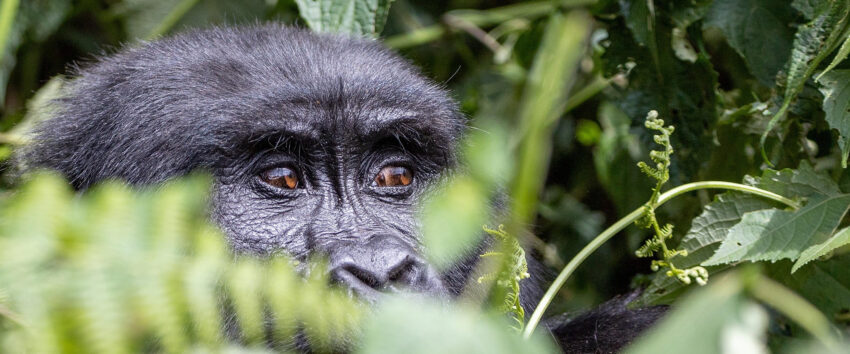
Gorilla trekking is a guided hike through mountain forest to spend one hour with a family of wild mountain gorillas that is used to people. Today you can go in two countries. In Rwanda, treks start in Volcanoes National Park, about 2.5 hours by road from Kigali, and the permit costs $1,500. In Uganda, treks start in Bwindi Impenetrable and Mgahinga Gorilla national parks, and the permit costs $800, or $600 in April, May and November. In both countries, up to eight visitors join each gorilla family a day, the minimum age is 15, and the walk can take from 30 minutes to most of a day, depending on where the gorillas are. For July and August, book about 6 months ahead.
Checked: October 2026. Permit prices and park rules come from the Rwanda Development Board (RDB) and the Uganda Wildlife Authority (UWA), and gorilla numbers come from the census partners and the IUCN. Figures from other publishers are marked "reported." Our tour prices are per person and include the gorilla permit.
Gorilla trekking at a glance
| Rwanda | Uganda | |
|---|---|---|
| Gorilla parks | Volcanoes National Park | Bwindi Impenetrable; Mgahinga Gorilla |
| Permit, foreign non-resident | $1,500 | $800; $600 in April, May and November |
| Visitors per family per day | Up to 8 | Up to 8 |
| Time with the gorillas | 1 hour | 1 hour; up to 4 hours on the habituation experience (reported) |
| Typical trek | 30 minutes to more than 4 hours | 2 to 7 hours |
| Closest you may go | 7 m (about 22 ft) | 10 m (about 33 ft) |
| Minimum age | 15 | 15 |
| From Kigali | About 2.5 hours by road | 3 to 5 hours by road, crossing the border (reported) |
| Who sells permits | Online through Irembo, or a licensed operator | Licensed tour operators only, for foreign visitors |
Check gorilla permits for your dates
Tell us your travel month and group size. Our team in Musanze checks permit availability and sends a private quote, with the permit included.
Sources for every figure are listed at the end of this page.
What is gorilla trekking?
Gorilla trekking means walking into a national park with a ranger guide to find one habituated gorilla family, watching it for one hour, and walking back out. RDB and UWA call it gorilla tracking; it is the same activity. Trackers go ahead to find the family, and your ranger guide leads your group to them.
"Habituated" means trackers and researchers have spent longer and longer with the family each day until it tolerates people nearby, a process the San Diego Zoo Wildlife Alliance puts at 2 to 5 years. Only habituated families receive visitors, one group a day.
The gorillas are mountain gorillas, a subspecies of the eastern gorilla, according to the International Gorilla Conservation Programme (IGCP), which is why you will also see the term mountain gorilla trekking.
Uganda also sells a longer version. The gorilla habituation experience, in Bwindi only, costs $1,500, rising to $1,800 on January 1, 2027, and SafariBookings reports that it gives you up to four hours with a family still being habituated.
Where can you see mountain gorillas?
Mountain gorillas live in just two areas: the Virunga Massif, a chain of volcanoes on the borders of Rwanda, Uganda and DR Congo, and Bwindi Impenetrable National Park in Uganda with the neighboring Sarambwe Reserve in DR Congo. In DR Congo, Virunga National Park's gorilla treks are closed until further notice, so Rwanda and Uganda are where you can trek today.
| Park | Country | Gorillas you can visit | Trek altitude | From Kigali |
|---|---|---|---|---|
| Volcanoes National Park | Rwanda | 12 habituated families | 2,500 to 4,000 m (8,200 to 13,100 ft) | About 2.5 hours |
| Bwindi Impenetrable National Park | Uganda | 25 habituated groups, not all open to visitors, in 4 sectors | 1,160 to 2,607 m (3,800 to 8,550 ft) | 3 to 5 hours to the southern sectors (reported) |
| Mgahinga Gorilla National Park | Uganda | 1 habituated group, about 8 permits a day | 2,227 to 4,127 m (7,300 to 13,540 ft) | About 4 hours to nearby Kisoro |
Volcanoes National Park, Rwanda. Rwanda's part of the Virungas takes in five volcanoes, the highest being Karisimbi at 4,507 m. Dian Fossey founded the Karisoke Research Center here in 1967, naming it after Karisimbi and Bisoke, and since 2022 the Dian Fossey Gorilla Fund has worked from its Ellen DeGeneres Campus, which our 2-day and 3-day Rwanda trips visit. Our office is in Musanze, the town next to the park.
Bwindi Impenetrable National Park, Uganda. Rainforest over steep ridges and deep valleys. UWA says Bwindi protects about 459 mountain gorillas, almost half of the world's total. Treks start from four sectors: Buhoma, Ruhija, and, closest to Rwanda, Rushaga and Nkuringo.
Mgahinga Gorilla National Park, Uganda. Uganda's corner of the Virungas, on three extinct volcanoes, with golden monkeys too. UWA lists one habituated group, which ranges across the border, so permits are few.
Rwanda or Uganda?
Both countries offer the same core visit: a habituated family, one hour, eight visitors at most. The differences are price, time and terrain.
- Rwanda suits a short trip. Volcanoes is about 2.5 hours from Kigali with no border, so a trek fits into one or two days.
- Uganda suits a smaller permit budget. The permit is $800, or $600 in April, May and November, and only Uganda offers the habituation experience. From Kigali, allow at least two days.
- You can do both. Uganda's southern gorilla parks are reported to be 3 to 5 hours from Kigali, so one trip can include a trek in each country.
Our Rwanda vs Uganda gorilla trekking guide compares terrain, drive times, visas and trip prices side by side.
What do gorilla permits cost?
RDB and UWA set the permit prices, so a permit costs the same whichever operator books it. These are the current rates for foreign non-residents, from RDB's booking portal, UWA's conservation tariff and UWA's February 2026 notice:
| Permit | Rwanda (RDB) | Uganda (UWA) |
|---|---|---|
| Gorilla trek | $1,500 | $800 |
| Low season | A conditional discount from November to May; not guaranteed, so ask us | $600 in April, May and November; cannot be rescheduled |
| Habituation experience | Not listed by RDB | $1,500 in Bwindi; $1,800 from January 1, 2027 |
| Golden monkey tracking | $100 in Volcanoes | $60, plus $40 park entry, in Mgahinga |
The permit covers your hour with the family and your ranger guides; in Uganda it also includes that day's park entry and a community contribution. It does not cover porters or transport. Every gorilla tour we sell includes the permit.
For booking rules, refunds, date changes and 2027 prices, see our gorilla trekking permit cost guide. For lodges, visas, tips and whole-trip prices, see how much a gorilla trekking safari costs.
Booking ahead. Rwanda issues only 96 permits a day, through Irembo or licensed operators. In Uganda, foreign visitors can buy permits only through licensed tour operators, and since March 1, 2026, UWA secures a permit only on full payment. For July, August and other peak dates, we recommend booking 6 months ahead.
What happens on trek day?
A trek day follows the same pattern in both countries. In Rwanda, it runs like this:
- Early start. From a lodge near the park, it is a short drive to headquarters. On our 1-day Rwanda gorilla trek, Kigali pickup is at 4:30 AM.
- Check in at Kinigi by 7 AM. RDB asks trekkers to report to park headquarters in Kinigi at 7:00 AM. Rangers brief you on the rules and assign each group a family, according to fitness, says Visit Rwanda.
- Drive to the trailhead. In Volcanoes, the walk often crosses farmland before it enters the forest.
- Follow the trackers. Trackers have gone ahead to find the family, and your ranger guide leads the group to them.
- One hour with the gorillas. You watch the family feed, rest and play until the guide calls time.
- Walk out. RDB notes that the way back can take as long as the way in. On our 1-day trek, you then have lunch and receive your gorilla trekking certificate.
In Uganda, the morning briefing is at the park office for the sector or park on your permit, such as Rushaga in Bwindi, or Mgahinga.
What if you don't find them? Sightings are not guaranteed, but RDB's rules cover a miss. If the gorillas' movements stop your group from tracking, you get another chance or a full refund. If you track all day without reaching them, RDB refunds 75% of the fee.
Gorilla trekking rules
The rules protect the gorillas from human illness and keep each visit calm. RDB and UWA publish them:
| Rule | Rwanda (RDB) | Uganda (UWA) |
|---|---|---|
| Distance | Keep 7 m (about 22 ft) away | Keep 10 m (32.8 ft) away |
| Group size | Up to 8 visitors | Up to 8 visitors per gorilla group |
| Time | 1 hour | 1 hour per gorilla group per day |
| Minimum age | 15 | 15 |
| If you are sick | Do not visit with a cold, flu or other contagious illness; you may be refused entry | Do not visit with a cold or other infectious illness |
| Photos | Allowed, without flash | No flash |
| Food, drink and smoking | Not near the gorillas | Not during the tracking |
Keep your voice low, and if you need to cough or sneeze, cover your face and turn away. We also ask guests to wear a face mask during the trek, because gorillas can catch coughs and colds from people. In July 2026, IGCP's country coordinator in Uganda listed masks, a distance of 7 to 10 meters and no flash among the tracking rules.
Distance is the easiest rule to break: a peer-reviewed study of 53 treks in Bwindi found visitors came closer than the limit on all but one. If your ranger guide asks you to step back, do it straight away.
How hard is gorilla trekking?
Expect a real hike. How hard depends on the family you are assigned and the weather.
- Time on your feet. RDB says hikes in Rwanda take from 30 minutes to more than four hours to reach the family. UWA says Uganda's treks last 2 to 7 hours and need moderate fitness.
- Altitude. Volcanoes treks reach 2,500 to 4,000 m (8,200 to 13,100 ft), so go slowly. Bwindi sits lower, but its slopes are steep and its trails muddy. Mgahinga's volcano slopes are similar in height to Rwanda's.
- Fitness. No specific fitness benchmark is required, but a reasonable level of fitness helps. Rwanda allocates families according to fitness, so mention any limits at the briefing.
- Help on the trail. RDB says porters can carry your backpack and camera and help with your footing.
- Rain. Rain makes trails more slippery, and treks may be longer or shorter depending on conditions and where the gorillas are. Rain does not necessarily mean a longer trek.
Tell us about any mobility or health concerns before you book, and we will talk through the options.
What to wear and pack
Mornings are cool and the forest is often wet. RDB recommends long trousers and shirts against stinging nettles, hiking boots, rain gear and warm clothing. Our gorilla tour packing list includes:
- A waterproof jacket and a warm layer
- Long pants and a long-sleeved shirt, in neutral colors
- Broken-in hiking boots, plus gaiters for mud and nettles
- Gloves for gripping vegetation; Visit Rwanda suggests gardening or leather gloves
- A hat, sunscreen and a light backpack with water and snacks
- A light face mask
- Your passport, if your trip crosses into Uganda
Our frequently asked questions cover packing and money in more detail.
Porters and tipping
In both countries you can hire a porter on trek day to carry your daypack and camera, leaving both hands free on steep, muddy sections. Horizon Guides reports porter hire at $10 to $20 per person, plus a tip. Porter fees are not included in our published prices.
For tips, Visit Rwanda's rough guide is $10 per day for professional guides and drivers and $2 for trekking porters. Our gorilla trekking cost guide puts tips into the full trip budget.
Photographing mountain gorillas
Both countries allow photos but not flash. You have one hour, so decide in advance how much of it to spend behind a camera.
- Plan for low light. Families often sit in shaded, thick vegetation, so a camera or phone that copes with low light does better than one that relies on flash.
- Protect your gear. A rain cover or dry bag keeps your camera dry on wet trails.
- Zoom, don't step in. The 7 m limit in Rwanda and 10 m limit in Uganda apply to photographers too.
- Want more time? A second trek doubles your hour. Our 3-day Rwanda double visits two families in Volcanoes, and our 4-day Uganda double treks in Bwindi and then Mgahinga.
Mountain gorilla facts and conservation
The two mountain gorilla populations, in the Virungas and in Bwindi, are about 50 km (30 miles) apart, according to the Dian Fossey Gorilla Fund.
- How many are left. The latest official total is 1,063: 604 in the Virunga Massif, counted in 2015 and 2016, and 459 in Bwindi and Sarambwe, counted in 2018. A new Bwindi and Sarambwe census ran in 2025, and on October 1, 2026, a Ugandan wildlife official told Xinhua that preliminary data show growth. Final results are still being analyzed, and we will update this figure when they are published.
- Status. In November 2018, the IUCN moved mountain gorillas from Critically Endangered to Endangered, after numbers rose from about 680 in 2008 to more than 1,000. The eastern gorilla as a species remains Critically Endangered, and in August 2026 the first IUCN Green Status assessment rated mountain gorillas "Largely Depleted" and dependent on continued conservation.
- Size and family life. Adult males can weigh over 180 kg (400 lb) and grow a silver-gray saddle, hence "silverback"; adult females weigh about 90 kg (200 lb), says IGCP. The African Wildlife Foundation says groups range from 2 to 40 gorillas, and an adult can eat up to 18 kg (40 lb) of vegetation a day.
- Threats. The IUCN lists poaching, recurring civil unrest and diseases caught from people, including respiratory infections, which is why the distance, mask and illness rules matter.
- Where your permit money goes. RDB says 10% of Rwanda's national park tourism revenue goes to communities around the parks, funding nearly 1,300 projects so far. UWA shares 20% of its park revenue with neighboring communities, plus $10 from every Bwindi gorilla permit.
- Kwita Izina. Rwanda names its newborn gorillas each year. At the 21st ceremony, in Kinigi on September 4, 2026, 22 infants were named, bringing the total since 2005 to 460, according to RDB.
When is the best time to go gorilla trekking?
Treks run all year, and so do our tours, 7 days a week. The driest months, with the easiest trails, are June to September and December to February. Visit Rwanda gives Rwanda's rains as mid-February to May and mid-September to mid-December; the Uganda Tourism Board gives Uganda's as March to May and September to November. Uganda's $600 permit falls in April, May and November, all wet months, and cannot be rescheduled.
For a month-by-month view, see our best time for gorilla trekking guide.
Gorilla trekking tours from Kigali
All of these private tours start in Kigali, include the gorilla permits, and travel in a private safari vehicle with a driver-guide. Prices are per person.
| Tour | Days | Gorilla treks | Park | From |
|---|---|---|---|---|
| 1-Day Rwanda Gorilla Trekking Adventure | 1 | 1 | Volcanoes | $1,692 for six; $1,960 solo |
| 2-Day Gorilla Trekking in Volcanoes National Park | 2 | 1 | Volcanoes | $2,030 for six; $2,668 solo |
| 3-Day Rwanda Mountain Gorilla Tracking Safari | 3 | 1, plus golden monkeys | Volcanoes | $2,428 for six; $3,450 solo |
| 3-Day Double Gorilla Trekking in Rwanda | 3 | 2 | Volcanoes | Price on request |
| 2-Day Uganda Gorilla Trekking Adventure from Rwanda | 2 | 1 | Bwindi | Price on request |
| 4-Day Uganda Double Gorilla Trekking and Golden Monkey Safari | 4 | 2, plus golden monkeys in Rwanda | Bwindi and Mgahinga | $2,996 for six; $4,350 solo |
| 5-Day Rwanda & Uganda Double Gorilla Trekking Safari | 5 | 2, plus golden monkeys and Akagera | Volcanoes and Bwindi | Price on request |
How to choose:
- One day only. The 1-day trek picks you up at 4:30 AM and has you back in Kigali by early evening.
- A night near the park. The 2-day trip adds the Kigali Genocide Memorial and the Ellen DeGeneres Campus; the 3-day trip adds golden monkeys.
- Uganda's permit in two days. The 2-day Uganda trip drives about four hours to Kisoro, crossing at Cyanika or Gatuna (Katuna on the Ugandan side), and treks in Bwindi the next morning before returning to Kigali.
- Two treks. The 3-day Rwanda double visits two families in Volcanoes; the 4-day Uganda double treks Bwindi and Mgahinga on back-to-back days.
- Both countries. The 5-day trip adds a game drive in Akagera, treks in Volcanoes, then crosses into Uganda for a second trek in Bwindi's Rushaga sector.
For a closer look at each country, read our guides to gorilla trekking in Rwanda from Kigali and Uganda gorilla trekking from Kigali.
Before you go: visas, yellow fever and advisories
- Visas. For a Rwanda-only trip, US travelers need a $50 single-entry Rwanda tourist visa, issued on arrival or online. A trip into Uganda and back enters Rwanda twice, so the $100 East Africa Tourist Visa (90 days, multiple entries, Rwanda, Uganda and Kenya) is usually simplest. Apply through the country you enter first.
- Yellow fever. Since October 2, 2026, Uganda no longer requires a yellow fever certificate for entry, but Rwanda still requires one from travelers arriving from countries with yellow fever risk, Uganda included. Carry yours if your trip crosses back from Uganda.
- Travel advisories. Check current travel advisories before you book; our FAQ has our latest note.
Ready to plan your gorilla trek?
Plan it with us
Tell us your travel month, group size, how many days you have and whether you lean toward Rwanda, Uganda or both, and we will suggest an itinerary and check permits for your dates. Request a quote, or WhatsApp or call either of our offices.
We plan trips from Musanze, next to Volcanoes National Park, and from Cedar City, Utah. East Africa Safaris is the trading name of East Africa Safari Tours, Inc., a Utah corporation, licensed by the Rwanda Development Board (license RDB/TL/2026/02/TO/00995).
Related guides: how many days for gorilla trekking; Bwindi Impenetrable National Park; Mgahinga Gorilla National Park; and golden monkey trekking.
Frequently asked questions
What is gorilla trekking?
Gorilla trekking is a guided hike into a national park to visit a family of wild mountain gorillas that has been habituated to people. Rangers brief your group, trackers find the family, and you spend one hour with the gorillas before walking back. Each family takes up to eight visitors a day, and the minimum age is 15. You can trek in Rwanda's Volcanoes National Park and in Uganda's Bwindi Impenetrable and Mgahinga Gorilla national parks.
Where is the best place to see mountain gorillas?
Mountain gorillas live only in the Virunga volcanoes, shared by Rwanda, Uganda and DR Congo, and in and around Uganda's Bwindi forest. Virunga National Park's gorilla treks in DR Congo are closed until further notice, so the choice is Rwanda or Uganda. Volcanoes National Park suits a short trip, about 2.5 hours from Kigali. Bwindi protects almost half the world's mountain gorillas and has the lower $800 permit.
How much does gorilla trekking cost?
The permit costs $1,500 in Rwanda and $800 in Uganda for foreign non-residents, and Uganda's falls to $600 in April, May and November. Our private trips from Kigali include the permit: the 1-day Rwanda trek is from $1,692 per person for a group of six, and the 2-day trip from $2,030. Flights, visas, tips, porters and insurance are extra. Our permit cost and trip cost guides have the full breakdown.
How long does a gorilla trek take?
In Rwanda, RDB says the hike to the gorillas takes from 30 minutes to more than four hours, and the way back can take as long. In Uganda, UWA says treks last 2 to 7 hours. The time depends on where your assigned family is that morning. Once you reach the gorillas, you get one hour with them. In Rwanda, you report to park headquarters in Kinigi at 7 AM.
Are you guaranteed to see gorillas?
No, but trackers go ahead to find the family, and in Rwanda, RDB's rules cover a miss. If the gorillas' movements stop your group from tracking, you get another chance or a full refund. If you track all day without reaching them, RDB refunds 75% of the permit fee. There are no refunds for late arrival, flight delays or cancellations, so plan a buffer before your trek day.
How close can you get to mountain gorillas?
RDB asks visitors in Rwanda to stay 7 meters (about 22 feet) away, and UWA's rule in Uganda is 10 meters (32.8 feet). If a gorilla moves toward you, follow your ranger guide's instructions. Photos are allowed in both countries, but flash is not. We also ask guests to wear a face mask during the trek, which helps protect the gorillas from coughs and colds.
How many mountain gorillas are left?
The latest official total is 1,063: 604 in the Virunga Massif, counted in 2015 and 2016, and 459 in Bwindi and the neighboring Sarambwe Reserve, counted in 2018. The IUCN has listed mountain gorillas as Endangered since 2018, an improvement on Critically Endangered. A new Bwindi census ran in 2025, and a Ugandan official said on October 1, 2026 that preliminary data show growth. Final figures are not yet published.
Which gorilla trekking tour is best for a short trip?
From Kigali, our 1-day Rwanda trek is the shortest: a 4:30 AM pickup, the trek in Volcanoes National Park and back by early evening. To trek rested, the 2-day trip adds a night near the park. For Uganda's lower permit price, the 2-day Uganda trip crosses the border to Kisoro and treks in Bwindi the next morning. Tell us your dates, and we will check permit availability.
Sources
Official sources were checked on October 10, 2026, along with our live guides and tour prices. Official sources come first, then conservation organizations and news, then reported figures, then East Africa Safaris.
- Visit Rwanda, Gorilla Tracking (official, RDB): https://visitrwanda.com/interests/gorilla-tracking/. Supports $1,500; twelve habituated families; eight permits per family a day; 96 permits a day; the 7am gathering at Kinigi; families allocated according to fitness; hikes of 30 minutes to four hours or more; 2,500 to 4,000 m; porters; minimum age 15; gaiters, gardening or leather gloves and a waterproof jacket; booking through Irembo or a licensed operator.
- RDB booking portal, Mountain Gorilla Tracking (official): https://visitrwandabookings.rdb.rw/rdbportal/web/rdb/mountain-gorilla-tracking. Supports $1,500 for foreigners; minimum age 15; up to 8 visitors; one hour; hikes of about 30 minutes to 4 hours or more, with a return that can take as long; the 7 m (about 22 ft) distance; photos without flash; no eating, drinking or smoking near the gorillas; low voices; no visits with a cold, flu or other contagious illness, and possible refusal of entry; reporting at Kinigi at 7:00 AM; porters; the refund rules (another chance or a full refund, 75% after a full day without contact, no refund for late arrival, flight delays or cancellation); clothing advice.
- RDB booking portal, Low Season Discount (Gorilla Trekking) (official): https://visitrwandabookings.rdb.rw/rdbportal/low-season-discount. Supports a conditional discount from November to May, tied to stays in Akagera or Nyungwe.
- RDB booking portal, Golden Monkeys (official): https://visitrwandabookings.rdb.rw/rdbportal/golden-monkeys. Supports $100 for foreigners.
- Visit Rwanda, Volcanoes National Park (official): https://visitrwanda.com/destinations/volcanoes-national-park/. Supports the five volcanoes, Karisimbi at 4,507 m and golden monkeys.
- Visit Rwanda, Weather (official): https://visitrwanda.com/facts/weather/. Supports the rainy seasons (mid-February to May, mid-September to mid-December) and the June to mid-September dry season.
- Visit Rwanda, Money (official): https://visitrwanda.com/facts/money/. Supports the rough tipping guide: $10 a day for guides and drivers, $2 for trekking porters.
- RDB, "Rwanda Celebrates 21st Kwita Izina, Naming 22 Baby Mountain Gorillas," September 4, 2026 (official): https://rdb.rw/rwanda-celebrates-21st-kwita-izina-naming-22-baby-mountain-gorillas/. Supports the date and place, 22 infants named, 460 named since 2005, 10% of national park tourism revenue reinvested in communities, and more than Rwf 23 billion for nearly 1,300 community projects.
- Rwanda Directorate General of Immigration and Emigration, Visitors Visa (official): https://www.migration.gov.rw/visa/visitors-visa. Supports the $50 single-entry tourist visa (30 days) and the $100 East Africa Tourist Visa with multiple entries.
- Rwanda Biomedical Centre, Info note for travelers (official): https://rbc.gov.rw/info-note-for-travelers/. Supports the yellow fever certificate for travelers from endemic countries, a list that includes Uganda.
- UWA Conservation Tariff, July 2024 to June 2026 (official PDF): https://ugandawildlife.org/wp-content/uploads/2024/03/UWA-Conservation-Tariff-July-2024-June-2026.pdf. Supports the $800 permit and $1,500 habituation experience; that the rates include the guide fee, the day's park entry and a community development contribution; foreign non-resident gorilla permits sold only through licensed tour operators; Mgahinga golden monkey tracking at $60 and the $40 park entrance; and UWA's gorilla tracking rules: minimum age 15, eight visitors per gorilla group, no visits with a cold or other infectious illness, a 10 m (32.8 ft) distance, no smoking, eating or drinking during the tracking, covering your face and turning away to cough or sneeze, one hour per group per day and no flash.
- UWA notice, "Introduction of Low Season Gorilla and Chimpanzee Permit Rates and Revised Tariff Structure," Ref TDO 93/04, February 26, 2026 (official PDF): https://ugandawildlife.org/wp-content/uploads/2026/03/Tariff-changes-2026-2027.pdf. Supports $600 gorilla tracking in April, May and November; that low-season permits cannot be rescheduled; gorilla tracking at $800 and habituation at $1,800 from January 1, 2027; and the end of the 7-day reservation window (full payment from March 1, 2026).
- UWA, Rates and Tariffs (official): https://ugandawildlife.org/uwa-rates/. Supports that no tariff or notice newer than the February 26, 2026 notice was listed on October 10, 2026.
- UWA, Gorilla Tracking (official): https://ugandawildlife.org/activities/gorilla-tracking/. Supports treks of 2 to 7 hours, moderate fitness, one hour with a habituated family, Bwindi's four sectors and Mgahinga issuing about 8 permits a day.
- UWA, Bwindi Impenetrable National Park (official): https://ugandawildlife.org/national-parks/bwindi-impenetrable-national-park/. Supports 25 habituated gorilla groups, 1,160 to 2,607 m, about 459 mountain gorillas, almost half of the world's population, and the southern sectors of Rushaga and Nkuringo.
- UWA, Mgahinga Gorilla National Park (official): https://ugandawildlife.org/national-parks/mgahinga-gorilla-national-park/. Supports one habituated transboundary gorilla group, 2,227 to 4,127 m, three extinct volcanoes and golden monkey habitat.
- UWA, Revenue Sharing (official): https://ugandawildlife.org/revenue-sharing/. Supports 20% of annual park revenue shared with neighboring communities, plus $10 from each Bwindi gorilla permit since July 1, 2015.
- Uganda National Citizenship and Immigration Control, "Official Notice: Yellow Fever Vaccination Certificate is No Longer Mandatory for Entry into Uganda," October 2, 2026 (official): https://www.immigration.go.ug/node/254. Supports the end of the mandatory certificate for entry into Uganda.
- Uganda National Citizenship and Immigration Control, East African Tourist Visa (official): https://www.immigration.go.ug/services/east-african-tourist-visa. Supports $100, 90 days, multiple entry, Uganda, Kenya and Rwanda only, and the first-entry rule.
- Uganda Tourism Board (Explore Uganda), Traveler Tips (official): https://exploreuganda.com/traveler-tips/. Supports the rainy seasons, March to May and September to November.
- Virunga National Park, official visitor site (official): https://visit.virunga.org/. Supports "Gorilla and Nyiragongo treks are closed until further notice."
- IUCN, "Fin whale and Mountain gorilla recovering thanks to conservation action: IUCN Red List," November 14, 2018 (official, Red List authority): https://iucn.org/news/species/201811/fin-whale-mountain-gorilla-recovering-thanks-conservation-action-iucn-red-list. Supports the move from Critically Endangered to Endangered, about 680 gorillas in 2008 and more than 1,000 in 2018, the threats (poaching, civil unrest and human-introduced diseases, including respiratory infections) and the eastern gorilla remaining Critically Endangered.
- International Gorilla Conservation Programme (IGCP), Mountain Gorillas: https://igcp.org/mountain-gorillas/. Supports mountain gorillas as a subspecies of the eastern gorilla, the two isolated populations, the global figure of 1,063 from the census results released in December 2019, the 2018 IUCN downlisting, and weights of over 180 kg (400 lb) for adult males and about 90 kg (200 lb) for adult females.
- Dian Fossey Gorilla Fund, "Census of Mountain Gorilla Population Shows Numbers Continue to Rise," December 16, 2019: https://gorillafund.org/dian-fossey/bwindi-census/. Supports 459 gorillas in Bwindi and Sarambwe (2018 census, two sweeps), the total of 1,063, the Virunga count of 604, and the two populations being about 50 km (30 miles) apart.
- Dian Fossey Gorilla Fund, The Karisoke Research Center: https://gorillafund.org/karisoke-research-center/. Supports Karisoke's founding on September 24, 1967, its name from Karisimbi and Bisoke, and the move to the Ellen DeGeneres Campus in 2022.
- Dian Fossey Gorilla Fund, "New IUCN Green Status Assessment Shows Eastern Gorillas Depend on Continued Conservation for Their Survival," August 4, 2026: https://gorillafund.org/gorilla-protection/new-iucn-green-status-assessment-shows-eastern-gorillas-depend-on-continued-conservation-for-their-survival/. Supports the "Largely Depleted" Green Status rating and mountain gorillas being conservation-dependent.
- African Wildlife Foundation, Mountain Gorilla: https://www.awf.org/wildlife-conservation/mountain-gorilla. Supports groups of 2 to 40 led by a silverback and up to 18 kg (40 lb) of vegetation a day.
- Xinhua, "Uganda's mountain gorilla population grows amid conservation efforts: official," October 1, 2026 (news): https://english.news.cn/20261001/fdedaebd97734dde8ce1930de9edb654/c.html. Supports preliminary census data showing growth, final results pending while samples are analyzed, and mountain gorillas remaining Endangered.
- Nile Post, via AllAfrica, "Uganda: IGCP, UWA Urge Hotels to Brief Tourists On Gorilla Tracking Rules to Protect Endangered Primates," July 19, 2026 (news): https://allafrica.com/stories/202607200709.html. Supports IGCP country coordinator Henry Mutabazi listing masks, a 7 to 10 m distance, no tracking when unwell and no flash.
- Weber, Kalema-Zikusoka and Stevens, "Lack of Rule-Adherence During Mountain Gorilla Tourism Encounters in Bwindi Impenetrable National Park, Uganda, Places Gorillas at Risk From Human Disease," Frontiers in Public Health, 2020 (peer-reviewed): https://doi.org/10.3389/fpubh.2020.00001. Supports the distance rule being broken on 52 of 53 observed treks.
- San Diego Zoo Wildlife Alliance Science, "Trekking with Wild Mountain Gorillas," by Lisa Vebber, October 21, 2019: https://science.sandiegozoo.org/node/18921. Supports habituation taking 2 to 5 years.
- Horizon Guides, "Is Uganda Or Rwanda Better For Gorilla Trekking?" by Charlotte Beauvoisin, last updated August 6, 2026 (reported): https://horizonguides.com/guides/gorilla-trekking/rwanda-uganda. Supports 3 to 5 hours by road from Kigali to Uganda's gorilla areas.
- Horizon Guides, "How Much Does Gorilla Trekking In Rwanda and Uganda Cost?" last updated August 6, 2026 (reported): https://horizonguides.com/guides/gorilla-trekking/gorilla-trek-costs. Supports porter hire at $10 to $20 per person, plus a tip.
- SafariBookings, "Gorilla Permit Uganda 2026," by Heather Richardson, updated June 22, 2026 (reported): https://www.safaribookings.com/blog/gorilla-permit-uganda-everything-need-know. Supports up to four hours with the gorillas on the habituation experience.
- East Africa Safaris tour pages (checked October 10, 2026): /tour/1-day-rwanda-gorilla-trekking-adventure/, /tour/2-day-gorilla-trekking-in-volcanoes-national-park/, /tour/3-day-rwanda-mountain-gorilla-tracking-safari/, /tour/3-day-double-gorilla-trekking-in-rwanda/, /tour/2-day-uganda-gorilla-trekking-adventure-from-rwanda/, /tour/4-day-uganda-double-gorilla-trekking-and-golden-monkey-safari/ and /tour/5-day-rwanda-and-uganda-double-gorilla-trekking-safari/. Supports the prices (solo and six sharing; three tours priced on request), permits included, private vehicles with driver-guides, the routes and parks, the 4:30 AM Kigali pickup, the gorilla trekking certificate and early-evening return on the 1-day trek, trackers going ahead, the walk through farmland, the Cyanika or Gatuna crossing and about four hours to Kisoro, the Rushaga sector on the 5-day trip, the packing list, and year-round, 7-days-a-week availability.
- East Africa Safaris, Mark Axelson's answers of September 29, 2026, and Mark Axelson's and Anna Axelson's answers of October 5 to 6, 2026: supports the 6-month lead time for July, August and peak dates, porter fees not included, no fitness benchmark, the minimum age of 15, masks on the trek, how rain affects treks, the 2.5-hour drive from Kigali to Volcanoes, office locations and the legal name, East Africa Safari Tours, Inc., a Utah corporation.
- East Africa Safaris, FAQ: https://eastafricasafaris.com/frequently-asked-questions/. Supports the RDB license number, RDB/TL/2026/02/TO/00995.